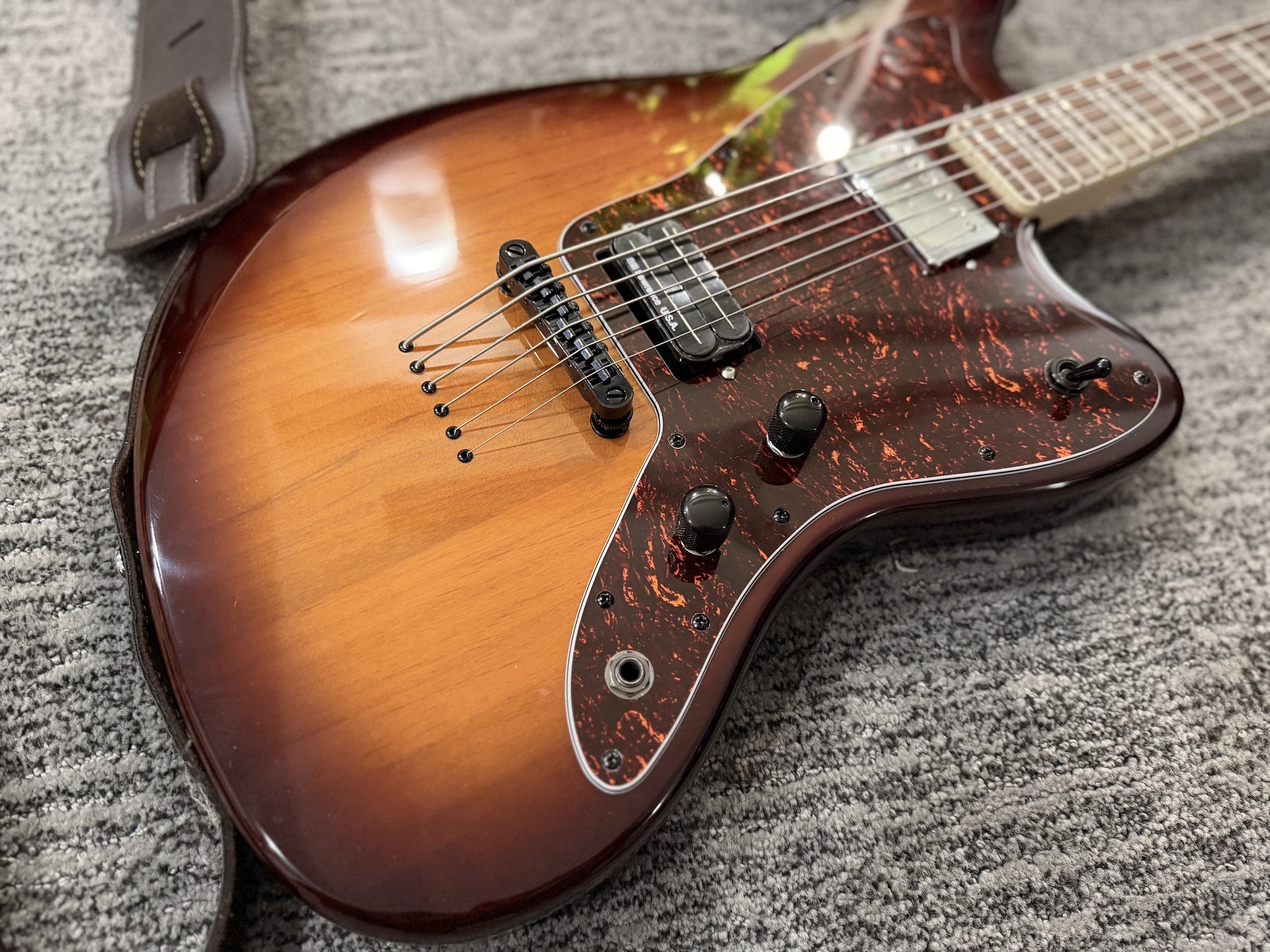
G4M 638 Baritone Guitar
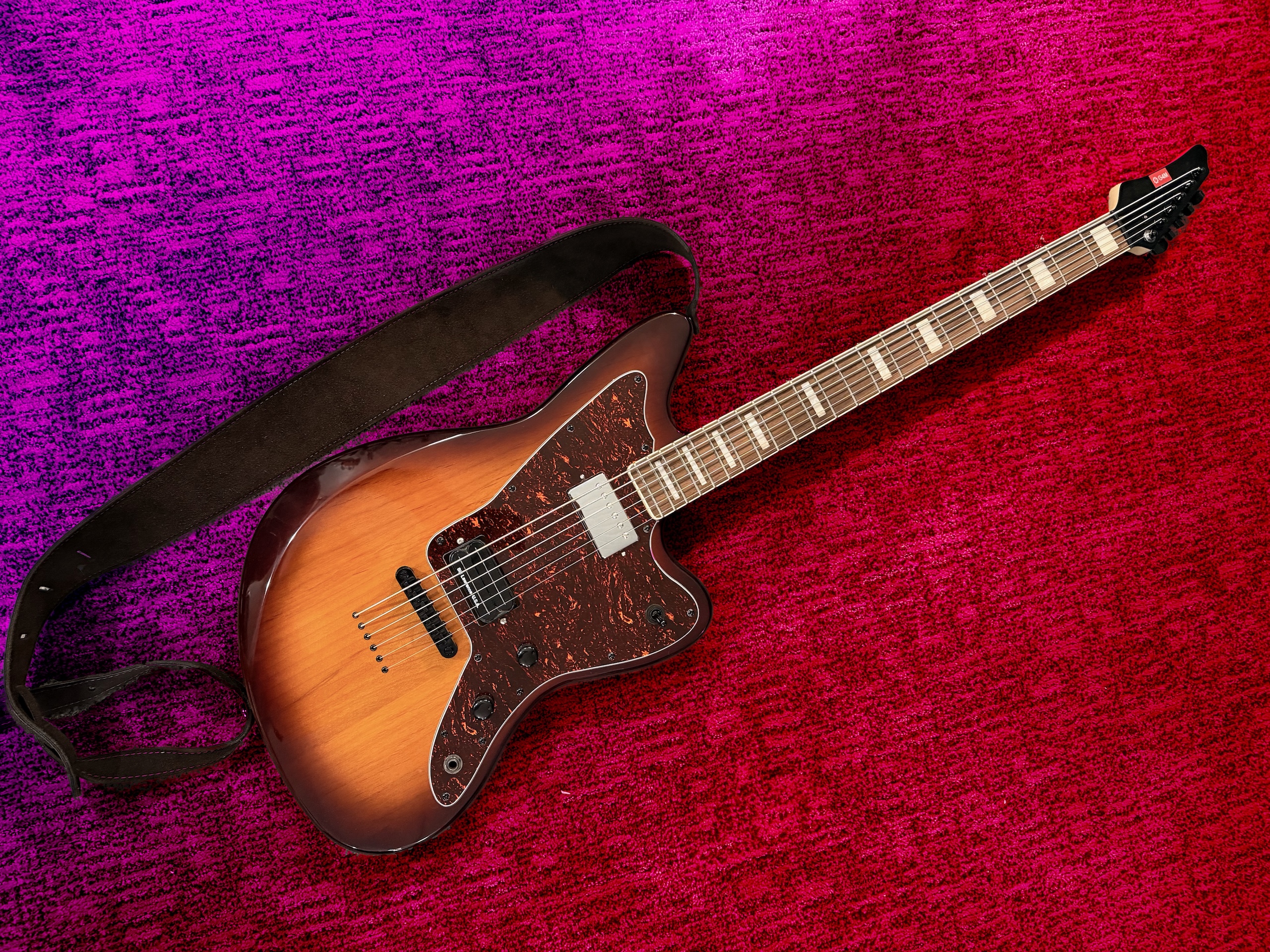
I picked up the Gear4Music 638 Baritone because I was looking for something in the Bass VI flavor—but without the trem. This seemed like a solid starting point for a modding project, and at around $275 shipped new from the UK (arrived in 3–4 days), it was hard to argue with the price.
Out of the box, the G4M 638 actually surprised me—it’s pretty solid for a budget baritone. The neck feels good in hand, finish and fretwork were fine (especially for the price point), and it was immediately playable once tuned and setup. But I knew going in that I’d be replacing most of the hardware and electronics to really make it mine.
Here’s a rundown of the upgrades I made:
-
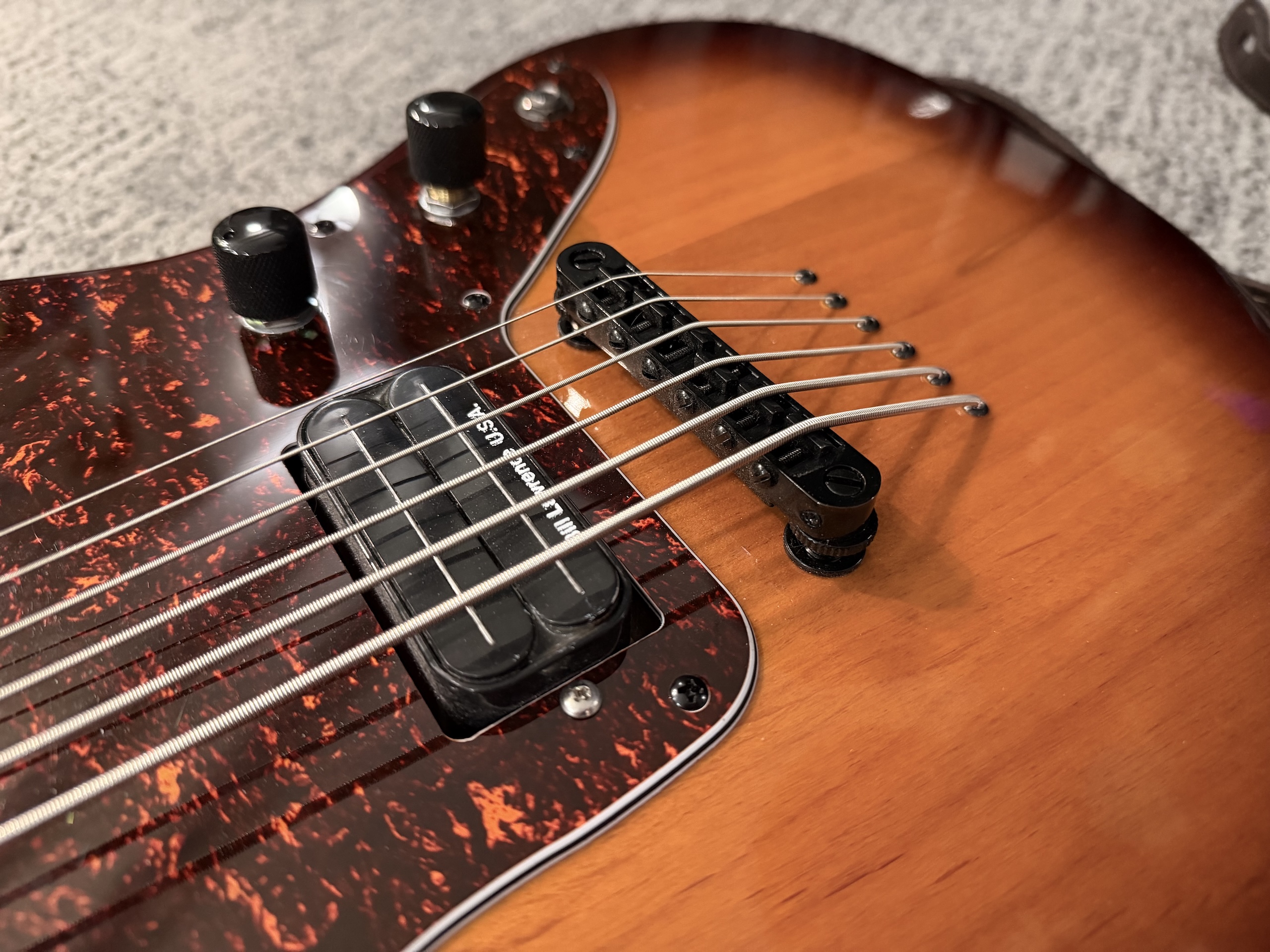
Pickup Upgrade: Dropped in a Bill Lawrence USA L500XL in the bridge position—not to be confused with the Bill & Becky version (though I’ve used that before and enjoyed it). I’m aware of the backstory and branding controversy around these pickups, but the USA version was locally available and affordable. Honestly, it’s a “mean”-sounding pickup—chunky and aggressive with high gain, but surprisingly articulate and clear when the gain is rolled back. Perfect for crossing over between doom/stoner riff work and cleaner, surfier textures.
-
Electronics: Swapped out the stock pots and switch for higher-quality components. Most notably, I installed a push/pull dual-mode pot that engages a bass roll-off. It acts almost like a passive low-end trim—super useful to get the baritone sounding a bit more “guitar-like” when I need it. That flexibility goes a long way in a multi-amp or modeler setup.
-
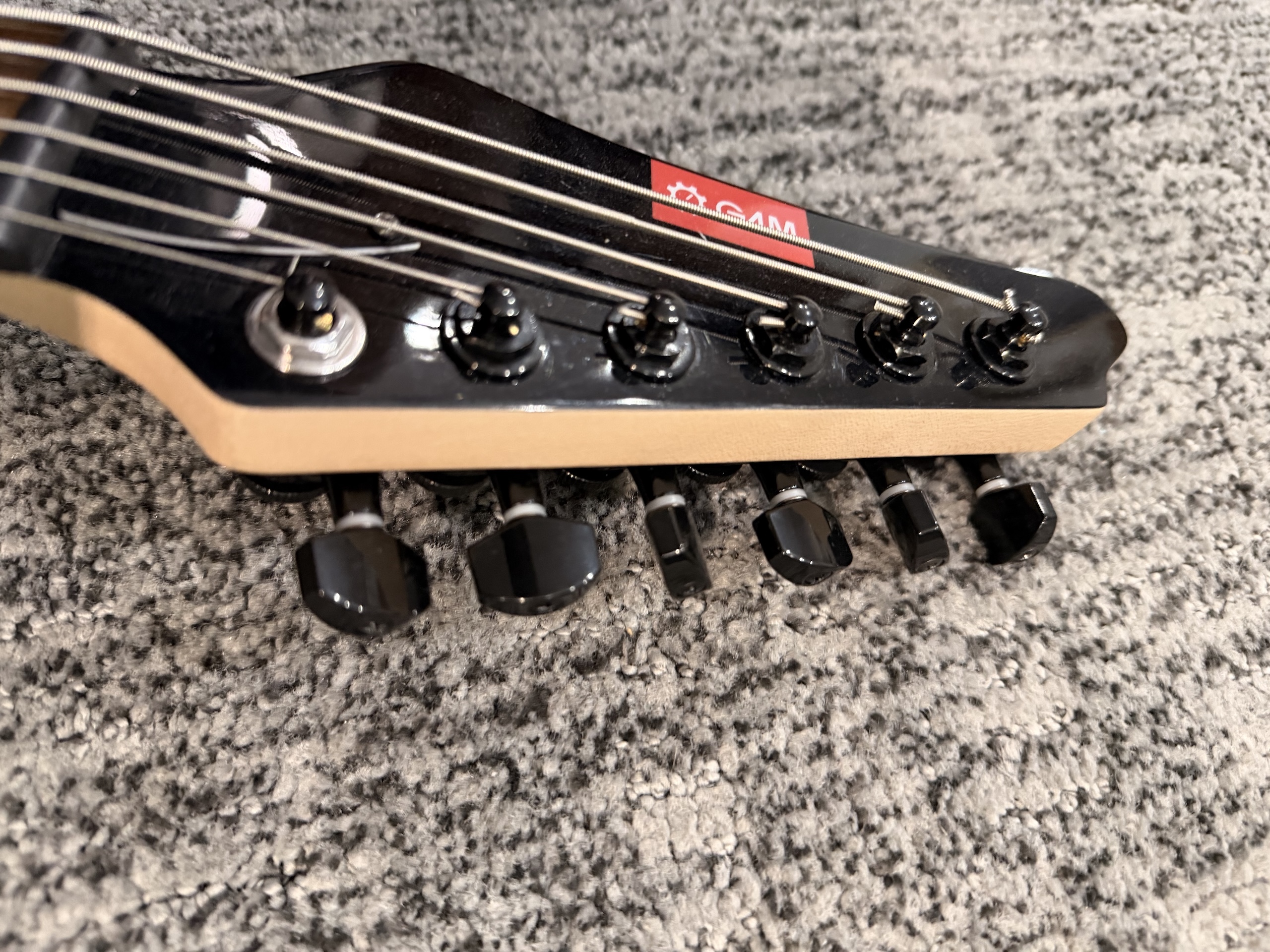
Tuners: Replaced the factory tuners with Hipshot Grip-Lock locking tuners (23mm post height, 0.090" string post holes). This was less about tuning stability (though that improved) and more about stringing ease, especially with heavier gauges or flatwounds.
-
Bridge: Swapped out the stock bridge for a sturdier fixed unit—partly for aesthetics (black hardware all around), partly for better intonation and sustain.
-
Strings: I run Ernie Ball 6-String Short Scale bass strings.
All in, I spent about $550 total—guitar plus parts. The labor was DIY, but if I were doing it again, I might pay a shop to handle the installs just to save time and avoid some of the "measure twice, order once" mistakes I made. (Learned the hard way about tuner sizing and bridge string spacing.)
But even with a few minor hiccups, I’d do it all over again. This thing punches way above its class once dressed up. For anyone looking to get into extended-range baritone territory—especially for heavier genres—but who isn’t into the trem-equipped Bass VI thing, the Gear4Music 638 is worth grabbing to just see how you feel about the scale/feel.
▹ Tip: Measure everything—string thru-hole size, tuner post height, bridge string spacing—before upgrading.
▹ Also worth noting: “Bill Lawrence USA” ≠ “Bill and Becky/Bill Lawrence Wilde Pickups” — do your research and try them for yourself. I found the L500XL USA version to be more than serviceable, but your ears may differ. Either way—they’re affordable and easy to source.